olixSense X1
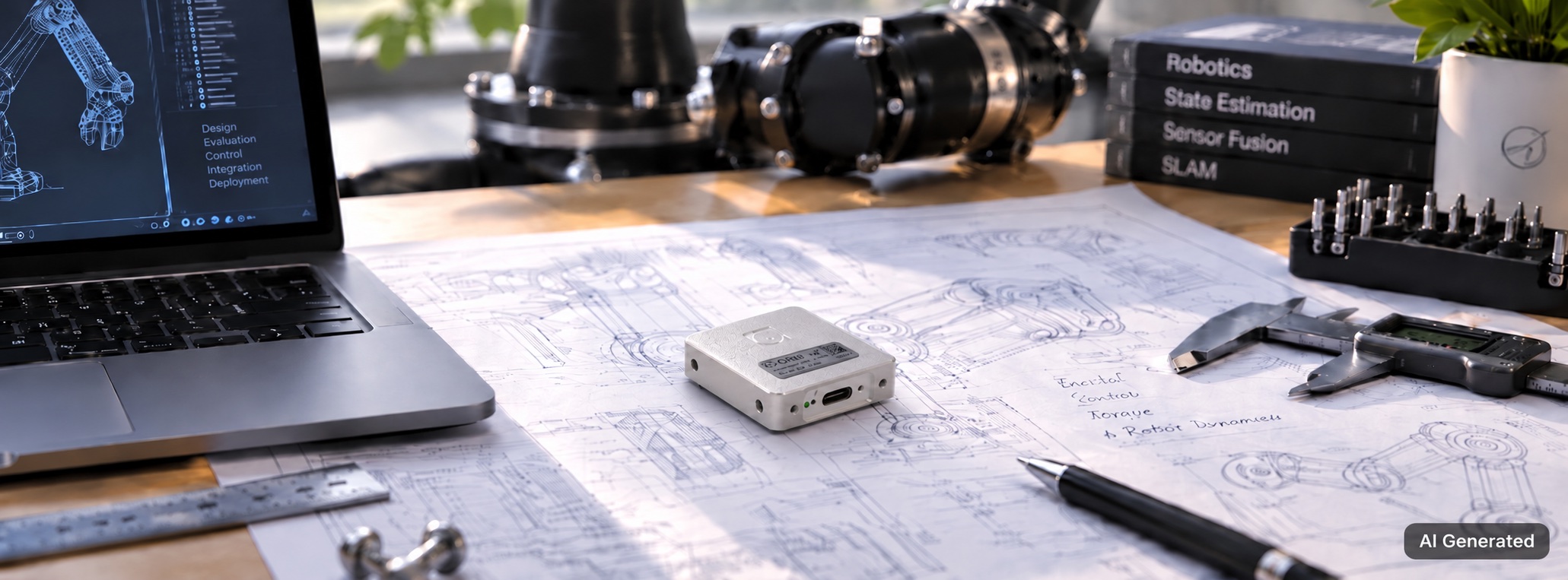
1 - Getting to Know the olixSense™ X1
This section provides an overview of the olixSense™ X1, a plug-and-play IMU sensor designed for robotics and motion sensing applications. It introduces the components included in the package and explains the main parts of the device and their functions. The section also gives a brief introduction to the built-in WebUI, allowing users to quickly access device information and basic configuration through a web browser. More details→
2 - Getting Started
This section guides you through the initial setup process of the olixSense™ X1. It covers hardware connection, powering the device, accessing the WebUI, and performing the first configuration. By following these steps, users can quickly start reading IMU data and using the sensor in their applications.
3 - Software Development
This section provides the information needed for integrating the olixSense™ X1 into software applications. It introduces the system interfaces, available communication methods, and supported ROS 2 topics and messages. Developers can use this information to integrate the sensor into robotic systems, data processing pipelines, or custom applications.
4 - Technical Specifications
This section presents the key technical specifications of the system, including hardware configuration, performance parameters, and other relevant technical details. It provides a clear refeThis section presents the key technical specifications of the olixSense™ X1, including IMU sensor characteristics, communication interfaces, supported protocols, and other hardware parameters. It serves as a reference for understanding the sensor’s performance and operational capabilities.
5 - Mechanical Drawings & CAD Models
This section introduces the overall hardware structure of the olixSense™ X1 device. It includes perspective views of the sensor module, interface location diagrams, and additional reference information to help users understand the device layout and integrate it into their systems.
6 - Developer Resources
1 - Quick Start & Onboarding
Start here for the recommended first steps, device access, WebGUI basics, and the common workflow for new users.
2 - Platform Installation
Install the required platform tools, ROS 2 environment, and host-side dependencies for development and integration.
3 - System Configuration
Review firmware updates, network setup, time synchronization, device parameters, and other system-level settings.
4 - ROS Interoperability
Learn how the product connects with ROS 2, DDS/RMW options, topic discovery, and external application workflows.